The cities were huge, and it was easy to fade into the roving rushes of hurried people, and even take one for pleasure regularly without notice. The cities were, no doubt, the perfect place for someone like me.
But it was time to go home.
I arrived in Anchor on a whim, tired of the dull, beaten taste of the big city locals, and settled for my lot in life: cornfed neighbors and a more difficult stalk.
I decided to get my bearings of the old place, although not much was old about it anymore.
Drive throughs, supermarkets, tire shops, hair salons—all the big city ticket items had invaded the farmland. I walked the main road, passing the neons and considering them an infestation of the prairie, and noting the constant traffic buzzing past me at the same time.
I arrived downtown, and was happily greeted by the same familiar buildings that had existed during my childhood. The brick buildings had been built to establish the white man’s presence, and the government sacrificed many farmers in order to start claiming the West, but I still felt fond of the string of decrepit stores.
I raised my finger and went down the line, starting at the corner storefront.
“Post office, Doctor Montgomery, Don’s General Store, and…,” I paused on the last, struggling to remember. “Horse Doctor?” I lowered my arm, giving in to defeat. Time had taken the memory, and there was still more to see.
I walked down the street, stopping at a lone, brick chimney that stood in an empty lot, accompanied only by a small, wooden sign.
STILLMAN’S CHURCH
1868
Stillman was a real piece of work. The congregation, of which I was a part of, helped build the church, only for it to burn down a few years later after Stillman performed an exorcism of sorts, trying to rid me of my demons. But now he’s gone, eternally resting, and I smiled as I stared at his failed enterprise, centuries later. But the feeling of elation faded quickly as his rotten state turned appealing in the back of my mind.
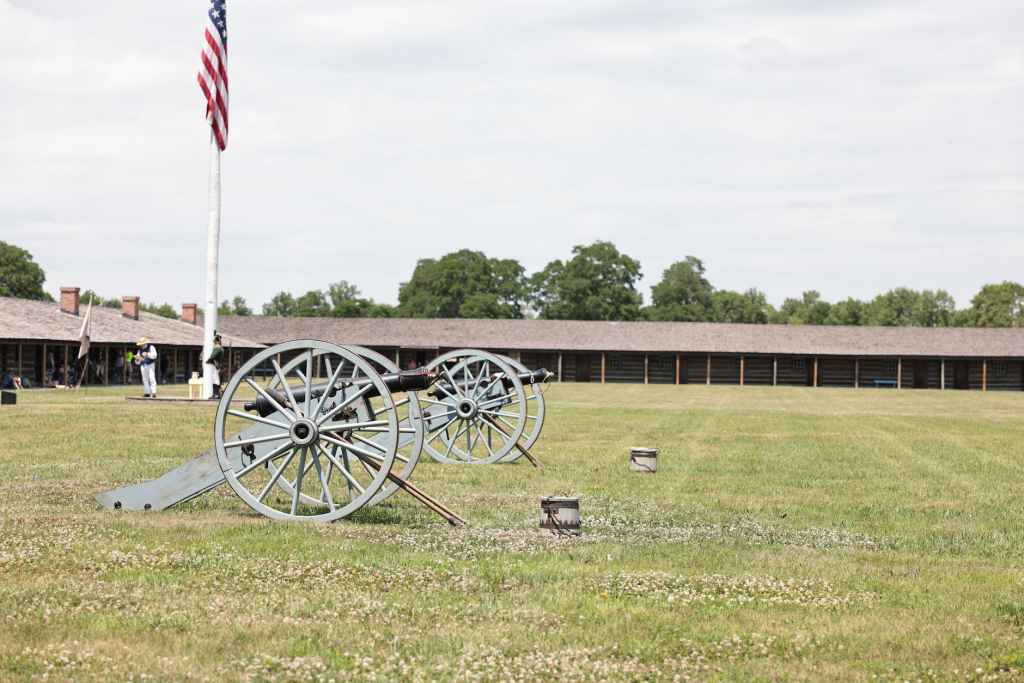
It was critical to continue, so I did, passing the holy ground and finding myself at the entrance to the historical military fort. I skirted through the unguarded entrance and walked quickly to the general’s office, grinning in anticipation.
I smiled when I saw the photo, still hanging on the wall by the bunk. It was me, dressed in the blue military uniform, just under the written cash reward. I studied the photo for a moment, recalling how they had pursued me for so long, and eventually caught me. The gallows had done little to ease their fear of what I had become, resulting in the exile that I had honored for all these years.
I did pity the town back then, as many of them were family. I trembled slightly at the memories of the people, knowing that they were good and I had become the opposite. I stood in the dark for a long while, lost in the chasm of history and violence that had followed me throughout the years.
“Thought I saw you on Lee Street,” a deep voice boomed behind me.
I turned, finding the familiar shape in the light of the open doorway.
“Just me,” he said, stepping closer and examining the poster on the wall. “I’ve been wondering where you ended up.”
“I always envied you, getting to stay in this place,” I said, embracing him. “Mother ever find out about you?”
He backed away and looked at the ground, slowly shaking his head.
“Of course. Can’t help the passage of time.”
I nodded, but grabbed his shoulder.
“It’s just so good to see you.”
He grinned, but it quickly faded.
“You can’t stay here, you know that, right?”
I paused, shaking my head.
“They exiled you,” he said.
“They are dead,” I said.
He looked at me for a moment, his eyes glinting in the dark room.
“I’m not.”
I backed away from him.
“You’re just like me,” I said forcefully. “They just never caught on!”
“We are not the same! I didn’t do what you did!”
“Pffft!” I began pacing the room.
“I have friends here,” he said quietly. “You need to go.”
“I have a brother here. Doesn’t that matter to you?”
“I had a brother,” he said. “But he was hung for his crimes.”
I threw my hands into the air and walked out of the office, the cool autumn air rushing past my ears as I passed through the fort’s gate. I heard my brother following close behind.
I trudged through the head-high grass of the prairie for over an hour, and he kept his distance, but still followed.
Soon, we were at the old wooden structure, also marked with a sign indicating the historic significance of the location.
THE VAMPIRE GALLOWS
A CASE OF MASS HYSTERIA
1872
“Just wanted to see if you kept it,” I said. “Seems you’ve done well to maintain the damn thing.”
“I don’t run the town,” he chuckled. “I don’t care for it either. I still see you swinging there.” He pointed to the rope, replaced with new rope by now, no doubt.
“Tourists probably like it,” I said.
“Love it. Some even believe it was a real monster. Mass hysteria never made much sense anyway.”
I flinched at the term, but knew it was fitting.
“I remember people—shooting at me,” I said.
He looked at the ground. He knew as well as I did that only one person had been firing shots at my body as I hung by the neck.
“You couldn’t see his face,” he began. “But Father was sobbing with each shot.”
I turned my back to the scene that was yet again unfolding before me, each phantom scream echoing from the past as if it were all playing out again.
“Why’d you do it?” he asked quietly.
I didn’t answer for a moment, but I had been formulating a response to that question for 150 years, yet I failed to snatch it from the deep recess of my brain, and, not accidentally, the truth slipped out.
“I was hungry.”


Leave a Reply